
7 Critical Mistakes to Avoid in the New Product Development Process
Bringing a complex electronic or hardware-enabled product to market is a high-stakes endeavor. When engineering teams and innovators embark on the new product development process, the focus is often naturally placed on big-picture features, sleek aesthetics, and core functionality.
However, at Pegmatis, our experience in end-to-end product development including hardware, firmware, and software engineering has shown us that products rarely fail because the original idea was bad. More often, they stall or suffer budget overruns because of critical oversights early in the design and production planning stages.
To help keep your commercialization journey on track, here are the top seven mistakes we routinely see during the new product development process, and how you can avoid them.
1. Requirements Are Missing, Half-Baked, or Not Formally Documented
One of the fastest ways to derail a new product development process is moving straight into engineering without a fully fleshed-out set of system requirements. When product scope lives in someone's head or relies on casual verbal alignment, project scope drift is guaranteed.
A successful new product development process requires a formal, comprehensive Product Requirement Document (PRD). This means documenting everything from environmental operating limits and target unit costs to battery life, compliance certifications, and user interactions. Skimping on clear, formal documentation early on leads to costly architectural redesigns late in the development cycle.
2. Electronics Designs Lack Test Points for Manufacturing
It’s common for initial printed circuit board (PCB) layouts to focus purely on trace routing, signal integrity, and fitting into a compact enclosure. However, if your hardware engineering team forgets to incorporate physical test points into the board layout, you will face major roadblocks during mass production.
In a mature new product development process, Design for Testability (DFT) is prioritized from the first schematic revision. Adding dedicated test pads allows automated test fixtures (like pogo-pin bed-of-nails testers) to quickly verify power rails, flash firmware, and check component connectivity on the factory floor. Without these test points, verifying individual boards becomes an expensive, manual nightmare.
3. Underestimating the Number of Prototype Units Needed for Testing in the New Product Development Process
Teams often try to stretch their engineering budget by building as few prototype units as possible. While minimizing early build counts seems like an easy way to save capital, it routinely backfires and delays the overall new product development process.
Prototypes are not just for basic functional validation. You need dedicated units running simultaneously across multiple tracks:
- Environmental, drop, and thermal stress testing
- Firmware and software QA
- Compliance and regulatory pre-testing (FCC, CE, UL)
- User experience and field trials
If you only build three or four prototypes, a single hardware destruction test or board failure halts your software team’s progress for weeks. Starving your team of prototype hardware slows down execution and inflates the overall timeline of your new product development process.
4. Skimping on System-Level Testing Efforts
Unit-level testing ensures the microcontroller boots up and the sensors take readings. But a product is more than a collection of individual sub-assemblies—it is an interconnected system of hardware, embedded firmware, cloud protocols, and physical enclosures.
One of the most dangerous shortcuts in the new product development process is skimping on full system-level testing. When thermal expansion affects an optical sensor, or when edge AI processing under heavy loads drains battery voltage enough to reset a wireless module, only comprehensive system testing will catch it. Uncovering these edge cases in the lab is vastly cheaper than discovering them via field failures and customer returns.
5. Neglecting Design for Manufacturing (DFM) Early On
Designing a working prototype in an R&D lab is a completely different challenge than producing tens of thousands of identical units on a factory floor. A common flaw in many hardware teams' new product development process is treating manufacturing as an afterthought—something to worry about after the design is finalized.
Without integrating Design for Manufacturing (DFM) principles early in the new product development process, you risk designing assemblies that require specialized hand-soldering, custom tooling with long lead times, or complex enclosure fastenings that double assembly line cycle times. DFM ensures component availability, optimizes board layout for pick-and-place machines, and designs mechanical parts that yield high production efficiency.
6. Ignoring Manufacturing Test Strategy and Test Tool Development
How will you confirm that unit #5000 off the production line actually works before it gets sealed in a box and shipped to a customer?
Many companies fail to consider how they will test their devices during volume manufacturing—and general post-deployment life. Developing dedicated test tools, custom jigs, and specialized diagnostic firmware as an integral part of your new product development process significantly raises long-term product quality while reducing per-unit manufacturing costs. Custom test infrastructure catches component defects early in the assembly line before expensive final packaging occurs.
7. Overlooking Automated Testing Infrastructure
When testing is handled manually, human error is inevitable, throughput is slow, and test coverage is inconsistent. Yet, automated testing is frequently overlooked during the new product development process due to the upfront engineering effort required.
Investing in automated hardware-in-the-loop test rigs and automated firmware regression suites pays massive dividends. Automated testing allows you to run hundreds of stress-test cycles overnight, ensuring that firmware updates don't break existing hardware functionality. In mass production, automated test lines process boards in seconds rather than minutes, keeping production yield high and unit costs low.
Build Right from the Start with Pegmatis
Successfully navigating the new product development process requires a holistic, end-to-end approach that balances creative hardware innovation with rigorous manufacturing reality. By capturing detailed requirements early, designing with DFM and testability in mind, and committing to thorough system validation, you set your product up for commercial success.
At Pegmatis, we specialize in helping organizations navigate every phase of the new product development process—from initial architecture and edge AI integration to manufacturing strategy and automated test systems.
Have a complex hardware or connected product in development? Reach out to the Pegmatis team today to ensure your product is engineered to scale.
Your trusted product development partner
Pegmatis is your ultimate end-to-end design partner, delivering exceptional hardware, software, and firmware solutions to bring your product vision to life. We specialize in high-fidelity design, cost-driven architecture, and seamless manufacturing support, leveraging our extensive network for mass production. Whether you need expertise with medical products, regulated industry solutions, connected technology, or other complex innovations, our team is equipped to handle even the most complex challenges.
Our story began as an elite design center for a Fortune 500 company, where we collaborated with top-tier customers to launch numerous high-volume products into the market. In 2016, Pegmatis emerged as an independent entity, carrying forward the same Dream Team and adding an elite software group to provide truly comprehensive product development services. With Pegmatis, you're not just hiring experts; you're partnering with a proven team dedicated to your success.
Related Blogs

Pegmatis to Exhibit and Present Deep Tech Award to Healthcare Startup at Brampton Venture Expo (BVX) 2026
Leading hardware, software, and firmware development firm Pegmatis will exhibit at BVX 2026 and sponsor the Mitacs Health Innovation Showcase pitch competition organized by Brampton Venture Zone.

AI for Product Development: How to Identify When AI Actually Adds Value to a Product
Components to think about when considering whether implementing AI for product development would be beneficial.
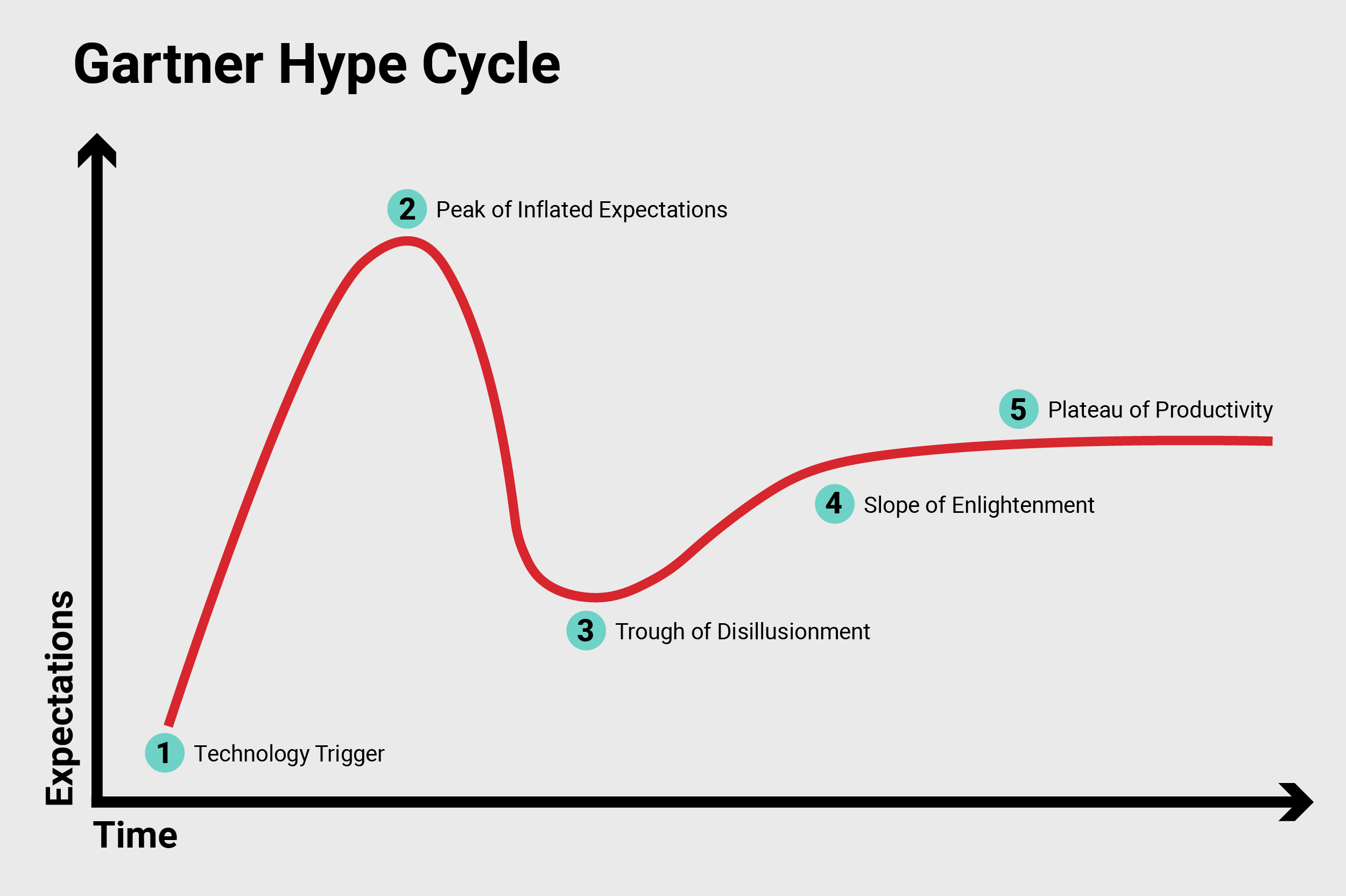
Medical Device Innovation & the Gartner Hype Cycle: What Innovators Need to Know
Learn how the Gartner Hype Cycle shapes medical device innovation and discover strategies to navigate development, adoption, and long-term success.