
Explaining a Proof of Concept vs Prototype in Product Development
%20Large.jpeg)
In the world of complex product development, particularly across highly regulated and technically challenging sectors, every engineering decision must be precise and strategic. This starts at the very first stage: product validation.
Understanding a Proof of Concept vs Prototype in Product Development
Often, terms like proof of concept (PoC) and prototype are used interchangeably, but in a professional product design and development process, they represent two distinct and sequential milestones. Understanding the difference is crucial for mitigating risk, securing investment, and achieving a swift, scalable path to market.
At Pegmatis, we guide clients from the initial idea through final manufacturing, and it all begins with knowing exactly what you need to validate, and when.
Proof of Concept (PoC): The Foundational Question
A Proof of Concept (PoC) is the earliest, most focused form of validation. It’s a project designed to answer one fundamental question: Can this idea actually work?
The PoC is built strictly to validate the technical or functional feasibility of a novel, central premise. It doesn't care about aesthetics, user experience, or whether it’s easy to manufacture; it only cares about solving the core engineering challenge.
Key Characteristics of a PoC:
- Goal: Validate a core hypothesis or technical approach.
- Focus: Narrowly focused on one specific function or component.
- Form: Often purely internal, non-visual, or a simple wireframe/test rig.
- Fidelity: Low-fidelity. Documentation and test data are often more important than the physical result.
- The Go/No-Go Decision: A successful PoC gives stakeholders the confidence to greenlight further investment, proving the idea isn't a dead-end before committing significant resources.
For example, a PoC for a medical device might simply be a bench test of a new sensor integration to confirm it accurately measures a specific biomarker under given conditions; it is nothing more.
Prototype: The Functional Demonstration
If your Proof of Concept proves that the idea is technically feasible, the next stage is the prototype. The prototype is built to answer a different question: How will this product look, function, and interact?
A prototype is the first functional build of your product idea that begins to incorporate both function and visual aesthetics. It takes the validated concept and gives it form, simulating the intended user experience, and testing the complex interplay of various features.
Pegmatis often develops multiple types of prototypes:
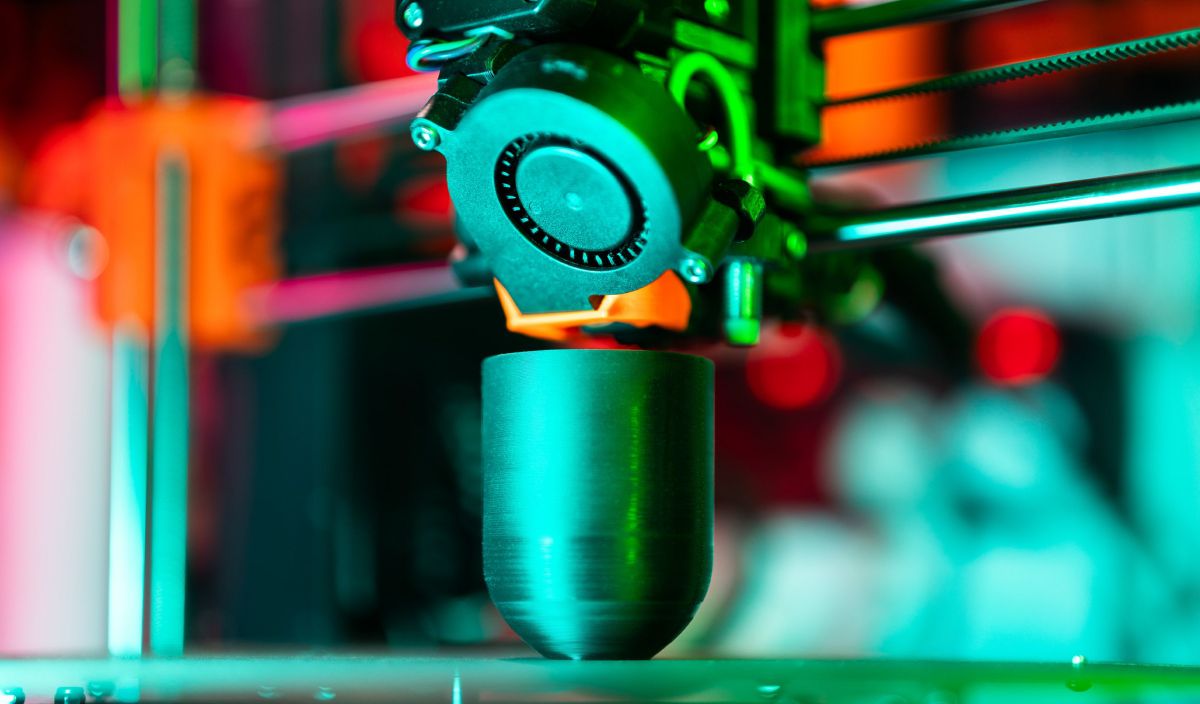
- Low-Fidelity Prototypes: Early models focused on basic layout and flow (e.g., a simple 3D print or UI mock-up) to test form factor and gather preliminary feedback.
- High-Fidelity Prototypes: Close to the final product in terms of appearance and function. These are often used to present to investors, secure funding, and conduct extensive user testing.
Key Characteristics of a Prototype:
- Goal: Demonstrate functionality, design, and user experience.
- Focus: Holistic, integrating multiple features and subsystems (hardware, software, firmware).
- Form: A tangible, often interactive, representation of the product.
- Fidelity: Varies (low to high), always featuring design elements.
- Mitigating Risk: Prototyping uncovers flaws in design, assembly, and user interaction before committing to manufacturing and/or tooling, dramatically reducing costs later on.
Once a prototype has demonstrated that the integrated system meets the intended functional and user experience goals and the product owner approves it, the next milestone is turning that prototype into a manufacturable, certifiable, and fully verified product.
Product: A Tested, Manufacturable, Market-Ready Device
While a prototype demonstrates the intended function and experience, a product is the stage where the design becomes fully validated, manufacturable, and ready for real-world use. This is where engineering decisions must meet regulatory, reliability, manufacturability, and cost requirements.
A product is a tested, verified, certified device that meets all defined requirements and is supported by the documentation, processes, and quality controls needed for production.
Key Characteristics of a Product:
- Goal: Deliver a manufacturable, compliant, fully verified device.
- Focus: Meeting defined functional, physical, safety, and regulatory requirements.
- Form: The final design, complete with controlled drawings, BoMs, software/firmware baselines, and production workflows.
- Fidelity: Production-level; the design is locked and ready for scale.
Understanding Engineering Validation Testing and Requirement Validation
During Engineering Validation, the prototype is evaluated against the full set of functional, physical, and form-factor requirements the product must satisfy:
- Functional requirements confirm the device performs its intended operations and outputs as defined. If certain functions prove infeasible, the team evaluates refined feature sets and determines whether adjusted performance still aligns with market needs and business objectives.
- Physical requirements validate durability, robustness, and real-word survivability. When results fall short of targets, tradeoffs are assessed across reliability, warranty exposure, customer expectations, and regulatory impact.
- Form factor constraints often introduce additional complexity, particularly as Industrial Design pushes size, weight, or aesthetic boundaries. In these cases, engineering and design collaborate to make informed concessions that preserve performance, usability, and manufacturability.
This type of requirement balancing is standard in mature product organizations, and Pegmatis navigates these tradeoffs early to prevent downstream risk.
The Transition From Prototype to Product
Technically, this transition represents Design Validation. At this stage, all Engineering Validation issues have been identified, resolved, and corrected. The resulting design represents the shippable product architecture, typically prior to formal certification.
This validated design is then used as the platform for:
- Regulatory and compliance submissions
- Certification testing
- Final production readiness activities
Pegmatis’ integrated approach ensures that Engineering Validation learnings are fully incorporated before entering Design Validation, reducing certification risk and avoiding costly redesigns later in the process.
The Pegmatis Approach: Integrating Both for Scalable Success
For product innovators, particularly those in Regulated Industries like MedTech or Aerospace, it is essential to engage a partner that understands the critical role both PoC and Prototyping play.
At Pegmatis, our integrated hardware, software, and firmware teams work side-by-side to handle both stages:
- POC Validation: Our elite engineering team quickly isolates the riskiest elements of your idea and builds the minimal necessary test environment to deliver a decisive "yes" or "no" on feasibility. This saves both time and resources.
- Prototype Refinement: We then transition immediately to high-fidelity prototyping, ensuring our designs incorporate Design for Manufacturability (DFM) principles from day one. This alignment is what turns a successful prototype into a scalable, market-ready product.
Skipping the PoC can lead to costly late-stage failures or complete program-level disasters if core assumptions are never properly vetted. Rushing the prototype can result in an unmanufacturable product. By respecting and executing all three stages, Proof of Concept, Prototype, and Product, Pegmatis provides a clearer, faster, and more efficient vector from concept to commercialization.
Ready to bring your complex vision to life? Consult with our team today to discuss your product idea and the next stage of development.
Your trusted product development partner
Pegmatis is your ultimate end-to-end design partner, delivering exceptional hardware, software, and firmware solutions to bring your product vision to life. We specialize in high-fidelity design, cost-driven architecture, and seamless manufacturing support, leveraging our extensive network for mass production. Whether you need expertise with medical products, regulated industry solutions, connected technology, or other complex innovations, our team is equipped to handle even the most complex challenges.
Our story began as an elite design center for a Fortune 500 company, where we collaborated with top-tier customers to launch numerous high-volume products into the market. In 2016, Pegmatis emerged as an independent entity, carrying forward the same Dream Team and adding an elite software group to provide truly comprehensive product development services. With Pegmatis, you're not just hiring experts; you're partnering with a proven team dedicated to your success.
Related Blogs
7 Critical Mistakes to Avoid in the New Product Development Process
Master your new product development process. Learn why missing requirements, weak system testing, and ignoring DFM can jeopardize your launch.

Pegmatis to Exhibit and Present Deep Tech Award to Healthcare Startup at Brampton Venture Expo (BVX) 2026
Leading hardware, software, and firmware development firm Pegmatis will exhibit at BVX 2026 and sponsor the Mitacs Health Innovation Showcase pitch competition organized by Brampton Venture Zone.
AI for Product Development: How to Identify When AI Actually Adds Value to a Product
Components to think about when considering whether implementing AI for product development would be beneficial.